

Cultural Treasures in Krakow: An Overview
Krakow is often called the cultural capital of Poland, as it is a city where true wealth has survived over the years, despite the wars of the last century.
It is the historic churches, the majestic image of the Wawel Castle and dragon, and numerous museums that attract true art and history enthusiasts from all over the world to Krakow.
Where should you go with a guide if you want to find the cultural treasures in Krakow?
Here is an overview of the places:
-> The Royal Wawel Castle
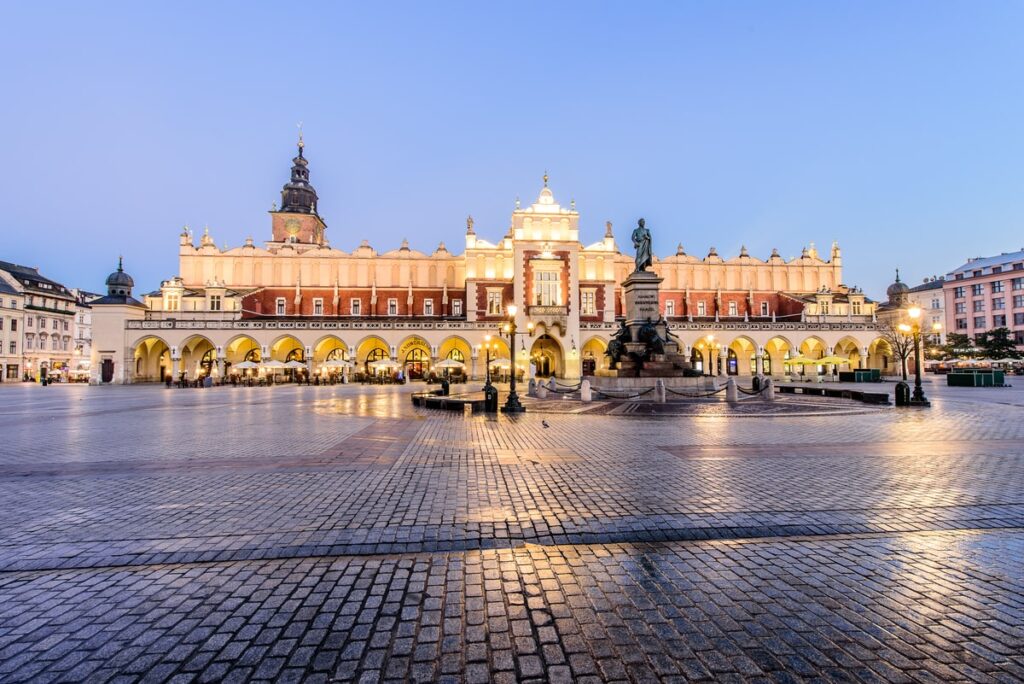
-> The Old Town and the Main Market Square in Krakow
-> The National Museum in Krakow
-> The Krakow Opera and the Krakow Philharmonic
Exploring the Royal Wawel Castle: A Symbol of Polish Heritage
The Market Square and the Royal Wawel Castle are two points that are most frequently visited by tourists from all over the world.
No wonder. The castle, located on a picturesque hill above the Vistula River, is a symbol of Polish national heritage. For centuries, the castle was the political and cultural center of the country, serving as the residence of many Polish kings and the site of their coronations and burials.
The Wawel Castle is an architectural complex consisting of many buildings that represent various architectural styles – from Gothic, through Renaissance, to Baroque. The heart of the castle is the Renaissance courtyard, from which views of the grand royal chambers unfold.
Adjacent to the castle, an integral part of the Wawel complex is the Wawel Cathedral – the coronation and resting place of Polish kings. Here lie the graves of great monarchs such as Casimir the Great and Władysław Jagiełło, as well as distinguished Poles such as the poet Adam Mickiewicz. The cathedral is also home to many national relics, including the famous Sigismund Bell.
One cannot overlook the legend of the Wawel Dragon, which is an inseparable part of the history of this place. At the foot of the hill is the dragon’s den, where, according to legend, the beast defeated by a heroic cobbler lived. Today, the dragon is a popular attraction for children and adults visiting the castle.
All this makes the royal castle a key point for many people during a visit to Krakow. It is especially worthwhile to visit this place with a guide!
The Artistic Soul of Krakow: Highlights from the National Museum
The National Museum in Krakow, one of the oldest and largest museums in Poland, houses several branches, each presenting unique exhibits corresponding to different periods and artistic styles.
What exactly will you find in this museum?
“Lady with an Ermine” by Leonardo da Vinci:
One of the most valuable artworks stored in the National Museum is “Lady with an Ermine” by Leonardo da Vinci. This Renaissance portrait, one of only four female portraits by the master, attracts thousands of visitors annually.
The military collection:
For military history enthusiasts, the National Museum’s military collection offers a unique look at the history of wars and conflicts. From armor and weapons from various epochs to personal memorabilia and decorations, these exhibits not only show the evolution of military techniques but also the personal stories of those who served on the fronts.
The 19th Century Polish Art Gallery:
This exhibition showcases the richness of Polish painting and sculpture from the 19th century. It includes works by the greatest Polish artists of that period, such as Jan Matejko, Jacek Malczewski, and Stanisław Wyspiański. The gallery helps to understand both the artistic currents of those times and the socio-political context in which the artists created.
Visiting the National Museum in Krakow not only allows you to admire great works of art but also to deepen your knowledge of Polish history and the impact it had on the development of European culture and art.
Krakow Old Town with English guide
Krakow’s Old Town, the heart of the former capital of Poland, is a true gem of architecture. To fully appreciate its historical and cultural richness, the ideal solution is to tour with an English-speaking guide.
Touring Krakow’s Old Town with an English-speaking guide is not only an opportunity to learn about its monuments but, above all, a chance to understand the depth and complexity of history that has shaped it over the centuries.
I guarantee that this experience enriches the perspective of every traveler, providing unforgettable impressions and new knowledge.

